
In today’s fast-paced world, convenience is king. The modern consumer is constantly seeking ways to save time and effort—whether it’s ordering groceries online or heating up a meal in a microwave. This growing demand for ease and speed has given rise to the booming ready-to-eat (RTE) and ready-to-cook (RTC) food industry. While these products offer a quick fix for hunger, they come at a silent but significant cost—your health.
Let’s dive deeper into why ready-to-eat and ready-to-cook foods are not as healthy as they seem, and how they can impact your body in the long run.
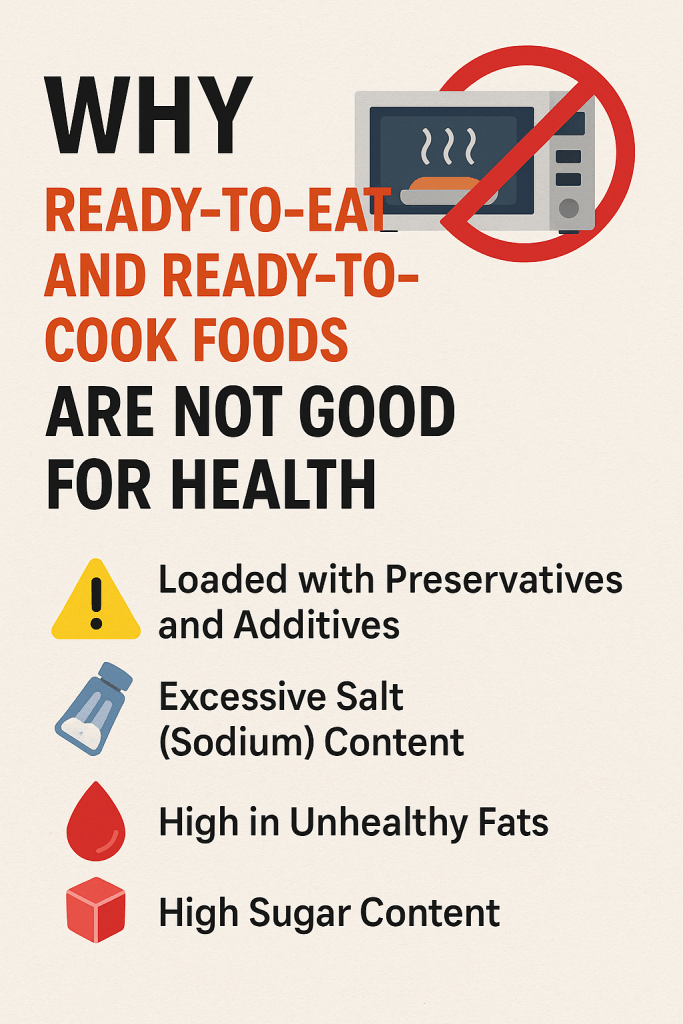
1. Loaded with Preservatives and Additives
One of the major red flags of packaged convenience foods is the use of chemical preservatives and additives.
Preservatives like sodium benzoate, nitrates, and sulfites are added to extend shelf life.
Artificial flavors, colors, and enhancers (like monosodium glutamate or MSG) are used to boost taste and visual appeal.
Health Impacts:
Long-term consumption of preservatives has been linked to cancer, asthma, skin allergies, and even neurological disorders.
Additives like MSG are known to cause headaches, fatigue, and increased hunger, leading to overeating.
2. Excessive Salt (Sodium) Content
RTE and RTC meals are usually loaded with sodium to enhance flavor and preserve the food.
An average ready meal can contain 40-60% of your daily sodium requirement in just one serving.
Health Impacts:
High blood pressure (hypertension)
Kidney damage and increased risk of kidney stones
Greater risk of heart attacks and strokes
Sodium overload can also cause water retention and bloating
3. High in Unhealthy Fats
Most convenience foods use cheap hydrogenated oils and trans fats for cooking and shelf stability.
RTC items like instant noodles, frozen parathas, and pre-fried snacks are often deep-fried or partially cooked in unhealthy oils.
Health Impacts:
Trans fats are notorious for increasing bad cholesterol (LDL) and decreasing good cholesterol (HDL).
Leads to obesity, atherosclerosis, and heart disease.
Poor fat quality contributes to fatty liver, especially when combined with a sedentary lifestyle.
4. Low in Nutritional Value
While these foods may be calorie-dense, they are nutrient-poor.
Vegetables, proteins, and grains used in these meals are often over-processed.
Cooking at high temperatures or prolonged freezing destroys essential vitamins and antioxidants.
Health Impacts:
Micronutrient deficiencies (e.g., Vitamin C, B12, Iron, Zinc)
Lowered immunity due to lack of essential nutrients
Fatigue and poor concentration as the body doesn’t get enough nourishment
5. High Sugar Content
You may associate sugar with desserts, but many savory RTE foods contain added sugars to enhance taste and texture.
Breakfast cereals, sauces, marinades, and even savory packaged foods are often sugar-laden.
Health Impacts:
Type 2 diabetes
Obesity
Insulin resistance and hormonal imbalance
Accelerated skin aging and inflammation
6. Hidden Calories and Overeating
Packaged foods are engineered to be hyper-palatable, meaning they are designed to taste so good that you eat more than you need.
Most ready foods do not create a feeling of fullness or satiety.
The result? You end up consuming more calories than required.
Health Impacts:
Leads to weight gain, food addiction, and disordered eating habits
Creates a vicious cycle of craving and snacking
7. Processed Meat Risks
Many RTE meals include processed meats like sausages, salami, ham, and kebabs.
These are preserved using methods like curing, salting, or smoking, often containing nitrates and nitrites.
Health Impacts:
Linked to colorectal and stomach cancer
Increases risk of heart disease and high cholesterol
Promotes inflammation in the body
8. Gut Health Disruption
A healthy gut is key to overall wellness. Unfortunately, the lack of fiber, excess additives, and chemical exposure from ready meals harm your gut microbiome.
Health Impacts:
Poor digestion and constipation
Irritable Bowel Syndrome (IBS) symptoms
Weakens immune system, since 70% of immunity is in the gut
9. Plastic Packaging and Toxins
Many RTE foods come in plastic containers or pouches, and these are often microwaved directly.
Heating food in plastic releases harmful chemicals like BPA and phthalates.
Health Impacts:
Disrupts hormonal balance (endocrine disruptors)
Linked to reproductive disorders, thyroid issues, and even cancer
10. False Sense of Health
Many ready foods are marketed as “healthy,” “organic,” or “low-fat,” but often the labels are misleading.
“Low-fat” often means more sugar or starch is added to maintain taste.
“Whole grain” labels may include refined flour and only 5–10% actual whole grains.
“High protein” versions are loaded with sodium and artificial flavorings.
Result:
You may think you’re making a good choice, but you’re often just eating junk food in disguise.
11. Environmental Concerns (Bonus Insight)
Although not directly related to health, it’s worth noting that the production and packaging of RTE/RTC foods generate massive waste and carbon footprint.
Excessive plastic use
Carbon emissions from refrigeration and transport
Overuse of single-use packaging materials
What You Can Do Instead
Instead of relying on ready-made meals, here are a few healthier habits you can adopt:
✅ Meal Prep at Home
Cook and store meals in glass containers
Use fresh vegetables, whole grains, and healthy oils
✅ Read Labels
Check for sodium, sugar, and preservative content
Avoid items with long ingredient lists you can’t pronounce
✅ Choose Frozen Whole Foods Over Packaged Meals
Frozen peas, corn, and berries retain more nutrition than pre-cooked meals
✅ Make Your Own “Instant” Mixes
Create homemade mixes for dosa, upma, oats, and pasta sauces using fresh, clean ingredients
✅ Choose Traditional Indian Diet Options
Moong dal chilla, khichdi, poha, thepla, and idlis are quick to make and highly nutritious
Final Thoughts
While it’s unrealistic to expect everyone to cook every single meal from scratch every day, the key lies in balance and awareness. Having a ready meal once in a while is fine, but making it your daily staple can lead to a slow deterioration of your physical and mental health.
Next time you reach for that microwave meal or frozen snack, remember:
Convenience comes at a cost—don’t let it be your health.
 The Food-O-Pedia